
Oak, pine, treated softwood or composite? Timber choice decides how a job looks on day one, how it weathers, how much looking after it needs and what it costs. Here is a plain-English guide to picking the right material, using a garden decking project as the worked example.
The four questions that choose your timber
Before any species names, ask these: Where is it going, inside or out? How long do you want it to last? How much maintenance are you honestly going to do? And what is the budget? Answer those four and the choice usually makes itself.
Case study: a garden deck
Decking is the perfect example because it faces everything Yorkshire can throw at it: rain, frost, baking sun and muddy boots. Here are the three routes we quote most often.
Pressure-treated softwood
The workhorse of British decking, and what most of our decks are built from. Softwood boards are pressure-treated to resist rot and insects, kind on the budget, and easy to work with. The trade-offs: it needs re-oiling or re-treating every year or two to stay looking its best, and it will move a little with the seasons. Looked after, a well-built softwood deck on a properly treated subframe gives you fifteen years or more.
Hardwood
Dense hardwoods like oak and balau are the showpiece option: tighter grain, richer colour and naturally durable without heavy treatment. They cost noticeably more and are harder work to machine and fix, but left to weather they silver beautifully, or keep their colour with an annual oil. Choose hardwood when the deck is the centrepiece of the garden and the budget can stretch.
Composite
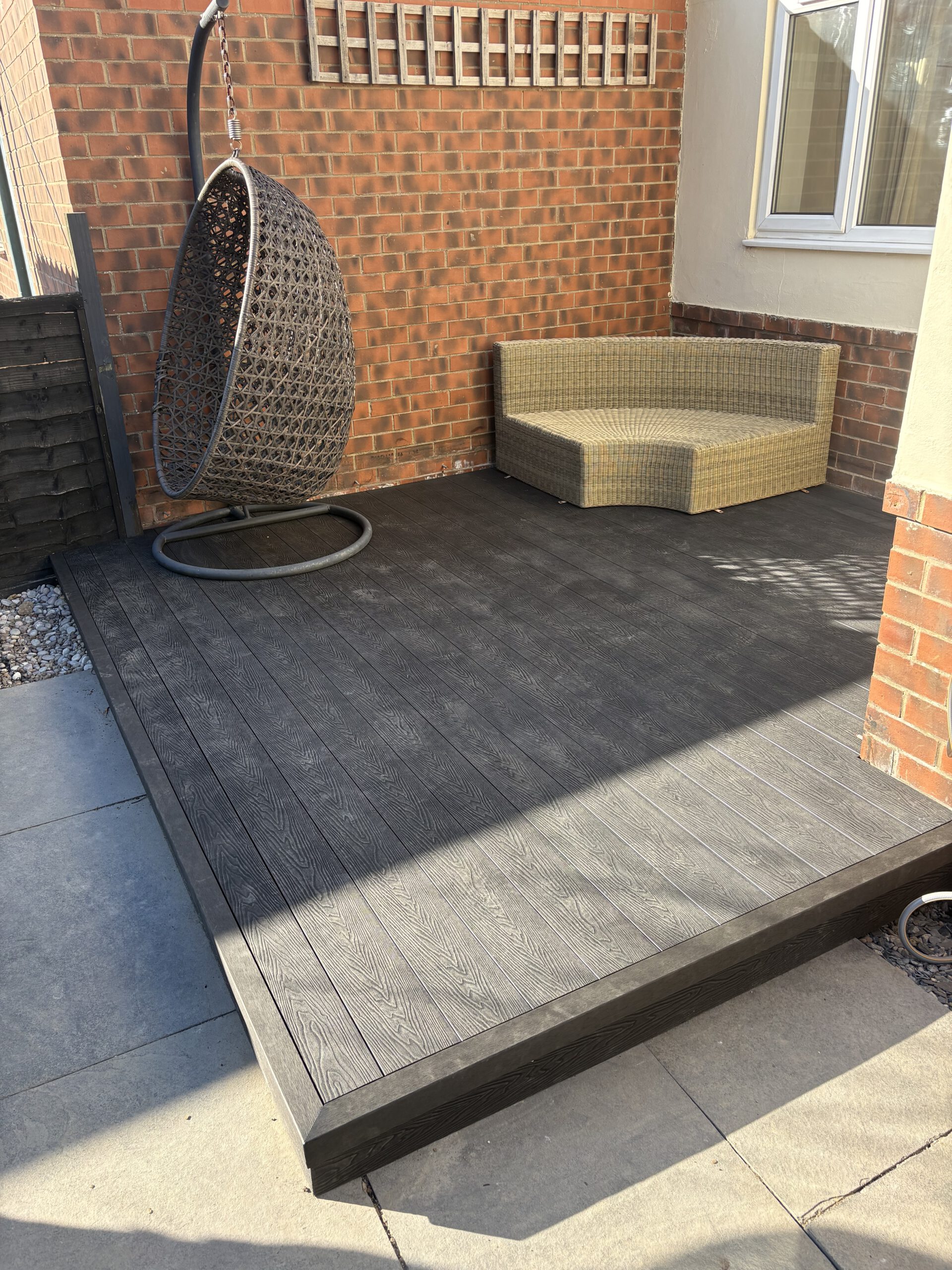
Not strictly timber, but worth comparing honestly. Composite boards mix wood fibre and polymer, never need oiling and keep a uniform look for years. Upfront cost sits above softwood, often near hardwood, and it lacks the warmth of real grain underfoot. For rental properties or anyone who wants zero maintenance, it is a sensible choice. Whichever boards you pick, the subframe underneath should always be properly treated structural timber, because that is what actually decides how long a deck lasts.
The same logic indoors
Inside the house the weather is off the table, so appearance and wear take over. Oak earns its keep on staircases, worktops and furniture that gets handled every day. Painted joinery like wardrobes and panelling is usually best in quality softwood or MR MDF, which takes paint beautifully and stays stable. For floors, engineered boards give you a real oak surface with far better resistance to movement than solid planks, especially over underfloor heating.
Buy once, buy right
Cheap timber is rarely cheap by year three. We buy from trusted local merchants, spec the right treatment for the job and are always happy to show you samples before anything is ordered. Not sure what your project needs? Get in touch for a free quote and we will talk you through the options in plain English.